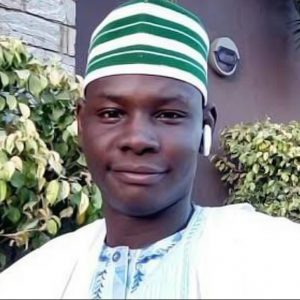
UN Working Group Confirms FRF’s Stand

Yahaya Sharif-Aminu’s Detention Violates Human Rights.

The Foundation for Religious Freedom (FRF) welcomes the recent publication of Opinion No. 32/2024 by the United Nations Working Group on Arbitrary Detention. This landmark decision sheds light on the injustice suffered by Yahaya Sharif-Aminu and confirms FRF’s long-held position: his arrest, trial, and continued detention violate Nigeria’s obligations under international human rights law.

Summary of the UN Working Group’s Opinion

The UN Working Group examined the circumstances surrounding Yahaya Sharif-Aminu’s arrest, trial, and sentencing under Kano State’s Sharia Penal Code. It concluded that his detention is arbitrary and falls under three critical categories of human rights violations:

Category I – The lack of legal basis for his arrest and detention, including being held incommunicado and denied due process.

Category II – His prosecution resulted directly from exercising his right to freedom of religion, thought, and expression.

Category V – His detention was discriminatory, targeting him as a member of a religious minority.

The Working Group unequivocally stated that Nigeria must release Yahaya immediately and compensate him for violating his fundamental rights. It further urged the Nigerian government to conduct an independent investigation into the circumstances of his arrest and trial to hold those responsible accountable.

Validation of FRF’s Advocacy

Since his unjust arrest in March 2020, Yahaya Sharif-Aminu—a young Nigerian musician—has endured years of systemic injustice. Convicted without legal representation and sentenced to death under Kano State’s Sharia laws, Yahaya’s case has highlighted serious procedural irregularities and constitutional violations. FRF has consistently argued that:

Yahaya’s arrest and trial were unlawful and unconstitutional.

Kano State’s Sharia Penal Code exceeds its constitutional mandate, which limits Sharia laws to personal matters such as marriage, inheritance, and family affairs.

Yahaya’s continued detention despite these violations amounts to a grave miscarriage of justice.

The UN Working Group’s opinion affirms these points. It underscores that Nigeria, as a signatory to international covenants such as the International Covenant on Civil and Political Rights (ICCPR), has failed to protect Yahaya’s fundamental rights, particularly his freedom of expression and religion.

Nigeria’s Silence: A Missed Opportunity

The UN Working Group formally invited the Nigerian government to respond to its findings and clarify the legal basis for Yahaya’s continued detention. Regrettably, the Nigerian authorities chose not to engage with the Working Group’s investigation. This silence only deepens concerns about the government’s commitment to upholding international human rights standards and addressing systemic injustices.

Call to Action: Immediate Release and Compensation

The Nigerian authorities must heed the UN Working Group’s decision. The following steps are imperative:

Immediate Release: Yahaya Sharif-Aminu should be released without further delay. His continued incarceration, despite procedural irregularities and the violation of his rights, is unjustifiable.

Compensation: The government must compensate Yahaya for the physical, emotional, and financial toll inflicted upon him and his family over the past four years.

Legal Reforms: Kano State’s Sharia Penal Code must be re-evaluated to ensure alignment with Nigeria’s constitutional and international human rights obligations.

FRF’s Continued Advocacy

The FRF remains unwavering in its commitment to securing justice for Yahaya Sharif-Aminu. We will continue to advocate relentlessly for his release, compensation, and the abolition of unconstitutional blasphemy laws that target religious minorities. Yahaya’s case is not only about one individual’s freedom but also about protecting the principles of tolerance, the rule of law, and freedom of religion in Nigeria.

The UN Working Group’s opinion is a powerful reminder that no one should suffer persecution for peacefully expressing their beliefs. The Nigerian government has an opportunity—and a responsibility—to right this wrong and demonstrate its commitment to justice and human rights.

We will not rest until Yahaya Sharif-Aminu is free and justice is served.

Read the entire UN Working Group Opinion here.

Much Ado About The Sharia Law

It is alarming that whilst Mr. Yahaya Sharif-Aminu has been languishing in jail for over four years trying to prove his innocence and also to challenge the constitutionality of the Sharia law as it is currently being practised in Kano State, a lawmaker seeks to expand the scope of the Sharia Law by removing the restriction from Islamic Personal Law to just Islamic Law. This is a sneaky and dangerous move and it must not be allowed to pass.

Kola Alapinni

On the 31st of October 2024, I wrote a letter to both the President of the Nigerian Senate and the Speaker of the House of Representatives. It was my reaction to the Bill that was surreptitiously sponsored by Mr Aliyu Bappa Misau (PDP Bauchi). A week earlier, on Thursday, 24th October 2024, Mr Misau had presented a Bill to the House of Representatives where he sought to expand the scope of the limitation placed on the Sharia Law in the Constitution through the back door. S. 277 of the Nigerian Constitution limits the jurisdiction and the application of the Sharia Law to questions of Islamic Personal Law such as marriage, validity of marriage and its dissolution, family relationship, guardianship of an infant, Wills, Succession, et cetera.

Imperfect as it may be, the framers of the Nigerian Constitution were deliberate in limiting the application of the Sharia Law to personal matters because Nigeria is a peculiar country. It is the largest Black nation in the world. Multi-cultural, multi-religious, multi-ethnic, multi-lingual, boisterous and could be highly volatile. It is a huge melting pot of various nation-states coupled together by the colonial British government for their economic interests. Nigeria was not created for Nigerians, it was created for trade, commerce and to supply Britain the ‘mother-ship’ with the much-needed raw materials and mineral resources the Empire needed. 

In recent years, the demography of Nigeria has almost split the country into two along religious lines. Originally, Nigeria used to be two countries, the Northern and Southern protectorate. Lord Fredrick Lugard, the colonial administrator fused the two together to ease the burden of financial administration on the British. The large, agrarian North was not sustainable without the wealth of its Southern counterpart.

The lawmaker thus submitted a Bill for reading to the House, but refused to provide copies of the Bill to his colleagues to study beforehand. None of them had seen the Bill before he introduced it on the floor of Parliament. It was a booby trap. He sought to expand the scope of the Sharia law limited to Islamic Personal law in the Constitution to just ‘Islamic Law’. It was a ruse. The oldest trick in the book. Of course, there was an uproar in Parliament, and the Bill was stood down for proper discussion and for him to provide copies of the proposed Bill to his colleagues to enable them to study it for a proper debate.

Upon the return of democracy in 1999, it was the first time a Northern Nigerian had not been at the helm of affairs since July 1966, except for the accidental regime of General Obasanjo, who succeeded his boss, General Murtala Mohammed. Gen. Mohammed had been assassinated in Ikoyi, Lagos, on his way to the mosque on Friday, 13th February 1976. Obasanjo thus ruled briefly from February 1976 to the 1st of October 1979, when he handed over to the civilian administration of Sheu Shagari. The North held sway again for an uninterrupted twenty years till 29th May 1999 when a now ‘civilianised’ Olusegun Obasanjo was returned to the Presidential Lodge.

A few years into Obasanjo’s first term, one Sani Ahmed Yerima, who had been elected Governor, took it upon himself to champion the introduction of the criminal aspects of Sharia Law in his Zamfara State. It spread like wildfire in Northern Nigeria, and we now have fourteen States in Northern Nigeria practising this brand of the Sharia Law. The Attorney-general of the Federation then ought to have approached the Supreme Court of Nigeria for an interpretation of the Constitution, but he failed to do so, perhaps because of his Principal’s quagmire. Obasanjo was seen as a Northern candidate. He had not only lost in his State, he lost in his ward. If he was going to get a second term, he dared not ruffle the feathers of Northern Nigeria. He thus settled for a political solution and reportedly said it would blow away. The problem is that the storm didn’t blow away, it has turned into a hurricane destroying everything in its path.

The epicentre of this destruction happens in the huge and sprawling city of Kano, where in September 2020, I led the legal team that intervened in two shocking cases of the implementation of the Sharia Law. The first was the case of Yahaya Sharif-Aminu (popularly named ‘The Kano Singer’ by the Nigerian media). The second was Omar Farouq Bashir (The Minor). Mr Sharif-Aminu was sentenced to death without legal representation for sharing a WhatsApp voice note where he allegedly elevated his Prophet of the Tijjanniya movement above Prophet Mohammed. Omar Farouq was sentenced to ten years in prison for an utterance he made in a verbal argument when someone took his phone and would not return it to him. He was just a child!

The Kano State High Court freed the minor. In Yahaya’s case, his death sentence was overturned for procedural irregularities and for being sentenced to death without any legal representation. We had argued that the Sharia law was unconstitutional. The court did not agree. The Court even said that S. 10 of the Constitution that states that ‘The Government of the Federation or of a State SHALL not adopt any religion as State Religion’ is not justiciable. We made a further appeal to the Court of Appeal (a federal court), which is the second-highest court in Nigeria. The Court upheld our argument on S. 10 and lampooned the lower court, but the judges couldn’t agree amongst themselves if Nigeria was a secular country or a multi-religious country!

Nigeria is a signatory to various international human rights treaties and instruments like the African Charter, The International Convention on Civil and Political Rights (ICCPR), The Child Rights Convention (CRC), the Convention on the Elimination of Discrimination Against Women (CEDAW) to mention a few. The provisions of the Sharia Law currently practised in Northern Nigeria thus violate these documents we have voluntarily signed up for. The Kano State Sharia Penal Code Law of 2000, for instance, has several provisions that allow for stoning to death, amputation of limbs, flogging or lashing of multiple strokes of the cane. This is a violation of S. 34 of the Constitution, which protects the Right to Dignity. The former Governor of Zamfara, who ended up in the Senate, married a thirteen-year-old girl, and nothing happened. It claimed it was his right under Sharia Law, yet Nigeria is a signatory to the Child Rights Convention and also domesticated it as an Act of Parliament. It is called the Child’s Rights Act. None of the Northern States implemented it as a Law in their jurisdiction.

It is thus alarming that while Mr. Yahaya Sharif-Aminu has been languishing in jail for over four years trying to prove his innocence and also to challenge the constitutionality of Sharia law as it is currently being practised in Kano State, a lawmaker seeks to expand the scope of Sharia Law by removing the restriction from Islamic Personal Law to just Islamic Law. This is a sneaky and dangerous move, and it must not be allowed to pass.

In any case, we have alerted the leadership of the National Assembly to refrain from any further discussions on the matter as this would be contemptuous. The matter is sub judice. It will also be an incursion into the territory of the judiciary. It is a legal question that must be answered one way or the other by the Supreme Court. What the National Assembly should be asking is why a criminal appeal and one that is seeking the determination of a crucial question on the constitutionality of the Kano State Sharia penal Code Law has not been heard since being filed at the apex court for two years?

We understand that the Court is overburdened and has not had its full composition for many years. This delay has given room for the likes of Mr. Misau to try to legitimise the injustice in Northern Nigeria by sneaking in an expansion. There is a reason for limiting the Sharia Law application in the Constitution to just ISLAMIC PERSONAL LAW. And if the Northern States were right, the lawmaker wouldn’t be seeking an expansion. Though the Constitution allows for State Houses of Assemblies to make their own laws, it cannot be in conflict with the Constitution. The Constitution reigns supreme.

We are sitting on a keg of gunpowder. Our country is being torn to shreds with all manner of religious and tribal sentiment. We must decide quickly how we want it. The First Amendment of the American Constitution guaranteed this for its citizens. Delay is dangerous. We must all be vigilant.

Kola Alapinni
FRF Director of Operations & General Counsel
International Human Rights Lawyer
Recipient of the 2023 US Secretary of State Award on International Religious Freedom

Bid to extend Shariah Law

On Thursday, 24th October 2024, the House of Representatives rejected a bill seeking to amend the Federal Constitution by expanding the scope for Sharia Law. The 1999 (Amended) Constitution permits States to enact Shariah provisions, but this right is explicitly limited to personal law, such as marriage, divorce, and inheritance.

The bill, sponsored by Bauchi State member Aliyu Misau, sought to remove the word “personal” wherever it appeared in sections 24, 262, 277, and 288 of the Constitution. Misau argued that restricting States to personal Shariah prevents them from implementing Islamic commercial law, which is required with the advent of Islamic banks.

Soloman Bob, representing Ahoada East/Abua/Odual Federal Constituency, Rivers State, opposed the bill, warning that it would expand the application of Islamic law beyond the “Personal matters” envisaged by the drafters of the 1999 constitution. He said, “The word ‘personal’ was put there for a reason.”

We are grateful to the National Assembly for rejecting this bill. In some ways, it could be viewed as a Trojan Horse. Zamfara State introduced Shariah Criminal Law in January 2000, and by 2002, a further 11 States had followed suit. Shariah Criminal Law goes far beyond the Constitutional permit but is in daily use in Bauchi, Borno, Gombe, Jigawa, Kaduna, Kano, Katsina, Kebbi, Niger, Sokoto, Yobe, and Zamfara. This bill would have helped shield these states from Supreme Court action to strike down these unconstitutional laws.

Nigerian States that have implemented Shariah Criminal Law are vulnerable in two ways: firstly, they have exceeded the powers granted by the Constitution and, secondly, aspects of Shariah Criminal Law conflict with human rights conferred by both the Constitution and by the The International Covenant on Civil and Political Rights (ICCPR) which Nigeria has ratified.

Yahaya Sharif-Aminu is an example of a Nigerian citizen whose rights have been trampled by Shariah Law. In August 2020, the 22-year-old was sentenced to death by hanging for praising Imam Ibrahim Inyass on WhatsApp. He was tried and sentenced without legal counsel. Our lawyers intervened and appealed against his conviction. On appeal, his conviction was set aside but was remitted back to the Shariah Court for retrial.

Our lawyers are now awaiting a date for the Supreme Court to hear Mr Sharif-Aminu’s third appeal. At this hearing, we shall argue that the Shariah Laws used to prosecute him are unconstitutional and should be struck down.

Please see below a letter from our Director, Kola Alapinni, to the President of the Senate and the Speaker of the House of Representatives addressing this matter.

“Thursday 31st October 2024
 
Sir:
 
RE: BILL SEEKING THE EXPANSION OF THE PROVISION FOR ISLAMIC LAW AS CONTAINED IN THE 1999 CONSTITUTION OF THE FEDERAL REPUBLIC OF NIGERIA (AS AMENDED) BY HOUSE OF REPRESENTATIVES MEMBER ALIYU BAPPA MISAU
 
The above subject-matter refers.
 
We acted as Counsel in two blasphemy trials that took place in the Kano State High Court and the Court of Appeal, Kano Division between 2020 – 2022 and continue to act as legal advisers to numerous other blasphemy cases in Northern Nigeria.

One of those cases is now at the Supreme Court and the appellant Mr. Yahaya Sharif-Aminu (a.k.a The Kano Singer) is challenging the constitutionality of the Sharia/Islamic Penal Code as currently being practised in fourteen States of Northern Nigeria. Please, see attached our Brief of Argument filed before the Supreme Court in Yahaya Sharif-Aminu vs Attorney-General of Kano State & Governor of Kano State (SC/CR/1454/2022)

It is our argument that the Sharia/Islamic law as currently being practised in Northern Nigeria is a violation of the 1999 Constitution of the Federal Republic of Nigeria (as amended) and also a violation of the obligations of Nigeria under international human rights law which it has signed up to voluntarily. Though, the constitution allows component States of the Federation through their State assemblies to enact Laws, those Laws must be in consonant with the Constitution. The Constitution remains the grundnorm.

This attempt to amend the Constitution through the Bill sponsored by Hon. Aliyu Bappa Misau is a feeble attempt to expand the Sharia/Islamic Law which is limited in the Constitution to Islamic Law ONLY, through the back door. It will fail! We are happy that the National Assembly stood this Bill down for further discussion. It is pertinent to note that, the details of this Bill was not even presented to the members of the National Assembly to study. It is a ruse. If the Sharia Law/Islamic Law as being practised by fourteen Northern States of Nigeria is Constitutional, then there will be no need to seek for an expansion through this Bill.

We hereby draw to your attention that this issue is subjudice. In the interest of the separation of powers, YOU MUST ALLOW the Supreme court to decide this legal question speedily. It is a legal issue, it is not political. You may wish to implore the Supreme Court of Nigeria to hear this without further delay in the interest of justice and once and for all allow all the citizens of this great country to know where they stand. Our client has been incarcerated unjustly for four years.

Thank you for your anticipated cooperation.

Warm regards,
 
 
Kola Alapinni (Senior Partner)
of The Supreme Court of Nigeria
Barrister & Solicitor
LLM in International Human Rights Law I Essex I
US Secretary of State Awardee on International Religious Freedom”

UN Support for Yahaya Sharif-Aminu

Today, United Nations experts urged Nigerian authorities to immediately and unconditionally release Yahaya Sharif-Aminu. On August 10, 2020, an Upper Shariah Court in Kano State, Nigeria, sentenced 22, year-old Yahaya Sharif-Aminu, to death by hanging on charges of blasphemy. Sharif-Aminu was tried without legal representation after being held incommunicado for six months.

The Foundation for Religious Freedom (FRF) swiftly appealed the conviction at the Kano High Court. The appeal was successful, and the conviction was quashed on 21 January 2021. However, the court ordered that Sharif-Aminu be remitted to the original Shariah court for a re-trial. Four days later, FRF appealed to the Appellate Court against the retrial. It took until August 2022 for the Appellate Court to dismiss the appeal. Following this setback, FRF appealed to the Nigerian Supreme Court. A date for the hearing is awaited. Meanwhile, Sharif-Aminu remains incarcerated more than four years after his arrest.

This case has caught the attention of international bodies and human rights advocates. UN experts have repeatedly urged Nigerian authorities to release Yahaya unconditionally. They emphasize that his detention and potential retrial violate fundamental human rights, including freedom of expression and belief, enshrined in international law and the Nigerian Federal Constitution.

They requested the Nigerian government to urgently review Sharif-Aminu’s situation, guarantee the protection of his human rights and ensure his physical and psychological well-being as well as that of anyone seeking to assist him in defending his human rights.

“Should the death sentence be re-confirmed by a court, the Government must issue a stay of execution until Nigeria’s laws comply with its international human rights obligations in matters relating to the death penalty,” they said.

The imposition of the death penalty on charges of blasphemy would amount to an arbitrary deprivation of life under international law.

The experts also recommended that Nigeria establish a moratorium on the death penalty, with a view to completely abolishing it.

FRF continues to champion Yahaya’s cause, highlighting the broader implications of his case. It is not just a fight for one man’s life but a stand against the persecution of religious minorities and the suppression of free expression in Nigeria. The FRF calls on the Nigerian government to align its laws with international human rights obligations and to ensure that no one else suffers the same fate as Yahaya.

The prolonged detention and the threat of re-prosecution highlight a critical human rights issue. FRF and international supporters urge the Supreme Court of Nigeria to prioritize Yahaya’s case and deliver justice that reflects the country’s commitment to human rights. The establishment of a moratorium on the death penalty for blasphemy and similar charges is imperative to prevent future miscarriages of justice.

Yahaya Sharif-Aminu’s case poignantly reminds us of the importance of safeguarding religious freedom and freedom of expression. FRF remains steadfast in its mission to defend these rights and secure Yahaya’s release. We urge all concerned individuals and organizations to join us in this critical fight for justice and human dignity.

The UN experts who spoke out today were Alexandra Xanthaki, Special Rapporteur in the field of cultural rights; Nazila Ghanea, Special Rapporteur on freedom of religion or belief; Irene Khan, Special Rapporteur on the promotion and protection of the right to freedom of opinion and expression; Margaret Satterthwaite, Special Rapporteur on the independence of judges and lawyers; Morris Tidball-Binz, Special Rapporteur on extrajudicial, summary, or arbitrary executions.

Appeal Court Judge’s home raided by armed EFCC agents

Yesterday, armed officers of the Economic and Financial Crimes Commission (EFCC) invaded the Kano residence of Justice Ita Mbaba, Presiding Judge of the Kano Court of Appeal. The alarming, unexpected raid took place at 5:00 am in the hours of darkness.

Justice Mbaba was one of three judges who heard our appeal against the decision to retry Yahaya Sharif-Aminu, who had been given a death sentence by a Shariah Court on blasphemy charges. More details here. Our appeal was rejected by a majority decision. Justice Mbaba delivered the dissenting judgment, arguing that Sharif-Aminu should be freed.

Armed dawn raids may be the appropriate way to deal with drug dealers and armed robbers, but such a frightening forced entrance cannot be justified on the residence of an appeal court judge.

In a statement, Wilson Uwujaren, Head of Media and Publicity for the Commission, admitted the raid took place but said Justice Mbaba was not the target. Uwujaren claimed the raid was concerned with a “property verification exercise”, and since Mbaba is not the owner of the house, it did not concern him. Except, of course, it did. Mbaba lived at the property located in the Nassarawa Government Reservation Area, he was awoken by the commotion, and he witnessed armed men forcing their way into the house.

The EFCC statement beggars belief. Are armed dawn raids standard procedure for property verification in that organisation? Can they show us the clauses in their Operations and Procedures Manual that sanctions this aggressive style of investigation? Have property verification exercises ever before been conducted by armed dawn raids? 

EFCC chairman Abdulrasheed Bawa, later called Justice Mbiba to “apologise for any embarrassment caused”.

One thing is certain, such raids can intimidate their victims and make them wonder if their lives are safe. What the real reason for this raid was, we do not know. But we cannot help wondering if it was connected with Mbaba’s dissenting Judgement in Sharif-Aminu’s appeal. We may never know, but we salute Justice Mbaba for his integrity and courage in delivering a dissenting Judgment in a blasphemy case.

The President of the Nigerian Bar Association, Yakubu Maikyau, issued a statement after the incident condemning the raid and calling for the operatives involved to face disciplinary action.

We agree. Nigeria needs a strong and independent judiciary that is not subject to harassment and intimidation.

Kano Appeal Court orders Yahaya to be retried for blasphemy

On 10 August 2020, Yahaya Sharif-Aminu was convicted of blasphemy and sentenced to death by hanging by the Kano Upper Shariah Court sitting at Hausawa Filin Hockey.

FRF appealed the conviction because:

1. Gross procedural errors in the trial (including failure to provide legal representation for Yahaya) made the conviction unsafe, and

2. Shariah blasphemy laws are unconstitutional in Nigeria because they conflict with Sections 10, 38 and 39 of the Constitution.

On 21 January 2021, the Kano High Court quashed Yahaya’s conviction and sentence but remitted him to the same Shariah court for retrial. The court also rejected our argument that blasphemy laws are unconstitutional. The court went further and stated that Section 10 of the Constitution was not justiciable, which means it is not a matter that can be discussed in a law court. (Section 10 prohibits the Federation or a State from adopting a religion as a State religion.)

Four days later, we filed a second appeal. We argued that Yahaya should have been released and not remitted for a retrial, and we reiterated our contention that blasphemy laws are unconstitutional in Nigeria.

Today, Justice Abubakar Lamido, delivered the Kano appeal court’s judgment via a video link. In a majority judgment, the Court upheld the decision of the High Court to remit Yahaya Sharif-Aminu back to the Upper Shariah Court for retrial. Justice Ita Mbaba, argued in a dissenting judgment, that Yahaya should be freed.

The justices also upheld the High Court’s decision on the legality of Shariah blasphemy laws with one exception; they held that Section 10 of the Constitution is justiciable.

This judgment is disappointing. The law relating to retrials has been clarified in several precedent cases. Cases in which procedural irregularities have occurred should not be subject to retrial. So, we believe the majority Justices disregarded the established precedents, whilst the dissenting Justice did not.

Today’s judgment was in summarised form. We plan to appeal again once we have seen the full judgment. The next appeal will be to the Nigerian Supreme Court.

We will make further announcements in due course.


Chronology of events

4 March 2020
Yahaya Aminu-Sharif’s house was ransacked and damaged by a mob.

Early March 2020
Yahaya was arrested.

10 August 2020
Yahaya was convicted of blasphemy and sentenced to death. Since his arrest, he had been kept incommunicado with no access to his family or a lawyer.

3 September 2020
FRF filed a notice of appeal.

26 November 2020
Yahaya’s case was heard in the Kano High Court.

21 January 2021
Decision announced. Yahaya’s conviction and sentence were quashed, but the court remitted him to the Kano Shariah Court for re-trial.

25 January 2021
FRF filed a second appeal. This time we appealed to the Appellate Court against the retrial.

There was a long court break because the judiciary was on strike, and the then Presiding Judge of the Court of Appeal, Kano Division, passed away.

1 December 2021
First hearing date: The state’s lawyers failed to turn up. The hearing was adjourned.

10 February 2022
Second hearing date: The state’s lawyers were present but failed to submit their respondent’s brief. The hearing was adjourned.

12 May 2022
Third hearing date: One judge was absent through sickness, and another was absent because of a domestic emergency. The hearing was adjourned.

23 June 2022
Fourth hearing date: The case was heard. Judgment was reserved–to be announced at a later date.

17 August 2022
Judgment announced.

Yahaya Sharif-Aminu’s 2nd Blasphemy Appeal in Court Today

Today, FRF lawyers appeared at the Federal Court of Appeal, Kano Division, Nigeria acting on behalf of Yahaya Sharif-Aminu.
 
A Kano Shariah Court sentenced Yahaya to death on August 10, 2020, on charges of blasphemy. Our lawyers successfully appealed that decision on November 26. However, the Kano High Court ordered a re-trial instead of releasing him. More details here.
 
We appealed the re-trial decision and we were in court today to argue the appeal. Kano State lawyers failed to submit arguments to rebut our motion to release Yahaya in advance of the hearing and they failed to turn up in court today.
 
This is a delaying tactic that we have seen repeatedly in the case of Mubarak Bala who was arrested on April 28, 2020, for Facebook posts that apparently offended some Muslims in the state. Mubarak remains incarcerated 19 months later and has yet to be tried. More details here.
 
Under the circumstances, the presiding Justices adjourned Yahaya’s hearing to February 10, 2022. If Kano state lawyers do not show up for the hearing in February, we will ask the Judges to make a decision in their absence based on the evidence in front of them.

Yahaya and Umar II

The court decides

Our lawyers were in court yesterday to hear the Appeal Court’s decision in the cases of Yahaya Shariff-Aminu and Umar Farouk. These two young men, 22 and 15 years old respectively, were accused of blasphemy and, in the same closed Kano courtroom on the same day in August last year, both were found guilty by Justice Khadi Aliyu Muhammad Kani. 

Neither was represented by legal counsel, and no evidence was produced in either case. The court relied upon admissions of guilt extracted by police through interrogations that were not video recorded.

The judge ordered that Yahaya be hanged from the neck until dead and Umar be imprisoned for 10 years with menial labour. The convicts were granted 30 days to appeal (rather than the normal 90 days) and were held incommunicado with no access to lawyers.

Our lawyers appealed both convictions on November 26, 2020. See details here

Umar’s Decision

Yesterday, the court was so crowded with people wanting to witness events that an extra gallery had to be cleared to make room. People took their seats and the decision in Umar’s case was announced first. Chief Judge Justice N. S. Umar and Justice Nasiru Saminu’s decision was that Umar had been convicted in error and the conviction is to be set aside and the court acquitted Umar and ordered that he must be released.

Yahaya’s Decision

Yahaya Sharif-Aminu in prison

The findings in Yahaya’s case were identical and his conviction was quashed. But instead of declaring him discharged and acquitted, the judges remitted him back to the Shariah court for a retrial. We wonder why such different outcomes for two cases in which the facts were essentially the same?

We must speculate, but Yahaya’s case had received huge media coverage whilst Umar’s case had not. Furthermore, Yahaya’s case had incited mobs in the streets of Kano and his father’s house was destroyed by fire. As expected, the packed courtroom was emotionally charged with frequent shouts of “Allahu Akabar” coming from the crowd. It would have taken a brave judge to set Yahaya free against that backdrop. Justices Umar and Saminu were not brave. They opted to let another court decide Yahaya’s fate.

Next Steps

Now the case is over, we have to get Umar released from prison. This involves obtaining a signed warrant from the court and presenting it at the prison. Our lawyers were hoping to do that today but the official signatory was not available so we will try again on Monday. We should all remember, Kano State has the option to appeal yesterday’s decision if they are minded to keep this child in prison. If they do, we will appeal to a higher court.

We also have to decide what to do about Yahaya’s case. If we return to the Shariah court as ordered by the Appeal Court, the argument will revolve around due process and the Appeal court has already found that wanting. Furthermore, the Shariah court is not competent to consider other motions, especially our contention that the Penal Shariah code is incompatible with the provisions of the Federal Constitution of Nigeria. If we can get a court to rule in favor of that argument, the foundations upon which blasphemy laws in Nigeria rest will be swept away and we would be free to challenge blasphemy laws in every state of the Federation.

We Will Appeal Again

So, following a case conference today, our lawyers decided to file an appeal at the Federal Court of Appeal to have yesterday’s decision set aside. This should enable Yahaya to be set free and to have the constitutionality of blasphemy laws in Kano put under the microscope. 

Whatever happens, we will work to have Umar released from prison and transferred to a safe location and to have Yahaya set free.

Yahaya and Umar I

Two blasphemy cases appealed

Today, our legal team appeared in the Kano High Court, arguing appeals for Yahaya Sharif-Aminu and Umar Farouk. On August 10, 22-year-old Yahaya was sentenced to death and 15-year-old Umar was sentenced to 10 years in jail with menial labor, both on charges of blasphemy. 

The appeals were heard by the Chief Justice of Kano, N.S. Umar and Justice Nasiru Saminu.

Our legal team arrived at court early and passed through a crowd of people who had come to see these cases but were unable to get into the already-packed court. Outside a substantial contingent of police officers were on hand to keep the peace but the crowd remained calm throughout.

Our legal team comprised (from left to right in the picture) Ebuka Ikeorah, Rouf Gazali, AA Muhammad, Murtala A. Alimi, and Kola Alapinni (lead counsel). We are grateful to these men for taking on this controversial case, especially since the Muslim Lawyers Association of Nigeria declared on August 15 that the death sentence on Yahaya was correct and urged the Government in Kano State to carry out the execution. Such a statement from a body that should remain strictly neutral would undoubtedly serve to intimidate lawyers who might otherwise have acted for Yahaya.

Neither appellant was in court today and our lawyers have been officially denied access to them since their trial in August.

Umar Farouk’s appeal was first up. Our lawyers argued that Umar was not legally represented at his trial, that he would not have pleaded guilty if he had been legally represented, and that he was below the age of criminal responsibility at the time of the alleged offense. Interestingly, prior to the court hearing, Kano state lawyers stood by the Shariah definition of “full age”. By this definition, a boy who has underarm hair and is able to produce semen may be prosecuted. However, they did not argue this point in court. In fact, they did not respond to any of the grounds of appeal proposed by our lawyers.

Yahaya Sharif-Aminu

Yahaya Sharif-Aminu

Yahaya Sharif-Aminu’s case was next up. Yahaya was of full age when the alleged offense took place but no evidence was produced at his trial and he suffered the exact same denial of rights and unfair trial process as Umar.

Kano State argued that Yahaya admitted his guilt and admission is “better than evidence”. But, of course, if he had been legally represented he would not have admitted guilt.

Our lawyers made the point that the right to life is a person’s most fundamental human right and this right cannot be denied except after the most diligent and fastidious investigation and trial, which did not happen in this case.

In both cases, our lawyers argued that the Federal Constitution of Nigeria protects the right to freedom of expression and that any law that seeks to deny that right must be void. In other words, the blasphemy laws in the Kano Shariah Penal code are unconstitutional and should be struck down.

The Judges retired to make their judgment. The date on which this will be announced will be advised in due course.

If the Judges should quash these sentences, Kano State Governor, Abdullahi Umar Ganduje, has promised to appeal against the decision. If the sentences are not overturned, we will appeal again. So, we expect these cases to continue, most likely to the Supreme Court of Nigeria.

Yahaya Sharif-Aminu

FRF appeals death sentence

On August 10, Judge Khadi Aliyu Muhammad Kani at the Upper Shariah Court in the Hausawa Filin Hockey area of Kano State, Nigeria, sentenced 22, year-old Yahaya Sharif-Aminu, to death by hanging. He was given 30 days to appeal.

Yahaya was accused of making comments on WhatsApp that elevated Imam Ibrahim Inyass above Muhammad. Shortly afterward a mob gathered around his family home and caused enough damage to render it uninhabitable. The mob then moved to the headquarters of the Islamic police and demanded action against the singer.

Mr. Sharif-Aminu was tried and sentenced without legal counsel. He is was held incommunicado making it impossible for him to seek legal advice to lodge an appeal.

In any case, the intimidation prevalent in the Northern State makes it next to impossible to find a lawyer who is prepared to act for a blasphemer. Most lawyers feel the punishment is justified and wish to see events take their course. Others, accept that everyone has a right to legal advice and due process but are cowed by the extreme anger that surrounds blasphemy cases—no lawyer’s safety can be guaranteed in this state. Even lawyers who are prepared to stand up for justice, know they they face a future of rejection by their legal colleagues and a probable end to their career.

This comes as Mubarak Bala has been held incommunicado in the same Nigerian state for 16 weeks for allegedly insulting the Islamic prophet. Both Sharif-Aminu’s case and Bala’s case have been characterized by a disregard for due process and violation of their human rights.

A chorus of condemnation has rained down on Kano State from Amnesty International, The U.S. Commission on International Religious Freedom (USCIRF) and many others. Two petitions have been started at Change.org, including one addressed to Nigerian President Muhammadu Buhari that had 85,000 signatures at the time of writing this. Please sign it here.

FRF decided to take action on behalf of Sharif-Aminu and filed an appeal on his behalf. On Thursday, September 3, lawyer Kola Alapinni, an FRF Trustee, filed an appeal against the death sentence. This removes the immediate danger to Sharif-Aminu’s life. Now we will seek access to him in order to prepare his defence.