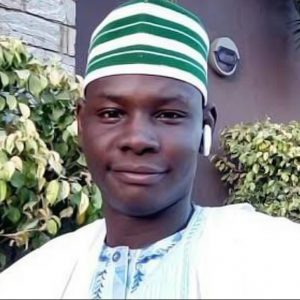
Much Ado About The Sharia Law

It is alarming that whilst Mr. Yahaya Sharif-Aminu has been languishing in jail for over four years trying to prove his innocence and also to challenge the constitutionality of the Sharia law as it is currently being practised in Kano State, a lawmaker seeks to expand the scope of the Sharia Law by removing the restriction from Islamic Personal Law to just Islamic Law. This is a sneaky and dangerous move and it must not be allowed to pass.

Kola Alapinni

On the 31st of October 2024, I wrote a letter to both the President of the Nigerian Senate and the Speaker of the House of Representatives. It was my reaction to the Bill that was surreptitiously sponsored by Mr Aliyu Bappa Misau (PDP Bauchi). A week earlier, on Thursday, 24th October 2024, Mr Misau had presented a Bill to the House of Representatives where he sought to expand the scope of the limitation placed on the Sharia Law in the Constitution through the back door. S. 277 of the Nigerian Constitution limits the jurisdiction and the application of the Sharia Law to questions of Islamic Personal Law such as marriage, validity of marriage and its dissolution, family relationship, guardianship of an infant, Wills, Succession, et cetera.

Imperfect as it may be, the framers of the Nigerian Constitution were deliberate in limiting the application of the Sharia Law to personal matters because Nigeria is a peculiar country. It is the largest Black nation in the world. Multi-cultural, multi-religious, multi-ethnic, multi-lingual, boisterous and could be highly volatile. It is a huge melting pot of various nation-states coupled together by the colonial British government for their economic interests. Nigeria was not created for Nigerians, it was created for trade, commerce and to supply Britain the ‘mother-ship’ with the much-needed raw materials and mineral resources the Empire needed. 

In recent years, the demography of Nigeria has almost split the country into two along religious lines. Originally, Nigeria used to be two countries, the Northern and Southern protectorate. Lord Fredrick Lugard, the colonial administrator fused the two together to ease the burden of financial administration on the British. The large, agrarian North was not sustainable without the wealth of its Southern counterpart.

The lawmaker thus submitted a Bill for reading to the House, but refused to provide copies of the Bill to his colleagues to study beforehand. None of them had seen the Bill before he introduced it on the floor of Parliament. It was a booby trap. He sought to expand the scope of the Sharia law limited to Islamic Personal law in the Constitution to just ‘Islamic Law’. It was a ruse. The oldest trick in the book. Of course, there was an uproar in Parliament, and the Bill was stood down for proper discussion and for him to provide copies of the proposed Bill to his colleagues to enable them to study it for a proper debate.

Upon the return of democracy in 1999, it was the first time a Northern Nigerian had not been at the helm of affairs since July 1966, except for the accidental regime of General Obasanjo, who succeeded his boss, General Murtala Mohammed. Gen. Mohammed had been assassinated in Ikoyi, Lagos, on his way to the mosque on Friday, 13th February 1976. Obasanjo thus ruled briefly from February 1976 to the 1st of October 1979, when he handed over to the civilian administration of Sheu Shagari. The North held sway again for an uninterrupted twenty years till 29th May 1999 when a now ‘civilianised’ Olusegun Obasanjo was returned to the Presidential Lodge.

A few years into Obasanjo’s first term, one Sani Ahmed Yerima, who had been elected Governor, took it upon himself to champion the introduction of the criminal aspects of Sharia Law in his Zamfara State. It spread like wildfire in Northern Nigeria, and we now have fourteen States in Northern Nigeria practising this brand of the Sharia Law. The Attorney-general of the Federation then ought to have approached the Supreme Court of Nigeria for an interpretation of the Constitution, but he failed to do so, perhaps because of his Principal’s quagmire. Obasanjo was seen as a Northern candidate. He had not only lost in his State, he lost in his ward. If he was going to get a second term, he dared not ruffle the feathers of Northern Nigeria. He thus settled for a political solution and reportedly said it would blow away. The problem is that the storm didn’t blow away, it has turned into a hurricane destroying everything in its path.

The epicentre of this destruction happens in the huge and sprawling city of Kano, where in September 2020, I led the legal team that intervened in two shocking cases of the implementation of the Sharia Law. The first was the case of Yahaya Sharif-Aminu (popularly named ‘The Kano Singer’ by the Nigerian media). The second was Omar Farouq Bashir (The Minor). Mr Sharif-Aminu was sentenced to death without legal representation for sharing a WhatsApp voice note where he allegedly elevated his Prophet of the Tijjanniya movement above Prophet Mohammed. Omar Farouq was sentenced to ten years in prison for an utterance he made in a verbal argument when someone took his phone and would not return it to him. He was just a child!

The Kano State High Court freed the minor. In Yahaya’s case, his death sentence was overturned for procedural irregularities and for being sentenced to death without any legal representation. We had argued that the Sharia law was unconstitutional. The court did not agree. The Court even said that S. 10 of the Constitution that states that ‘The Government of the Federation or of a State SHALL not adopt any religion as State Religion’ is not justiciable. We made a further appeal to the Court of Appeal (a federal court), which is the second-highest court in Nigeria. The Court upheld our argument on S. 10 and lampooned the lower court, but the judges couldn’t agree amongst themselves if Nigeria was a secular country or a multi-religious country!

Nigeria is a signatory to various international human rights treaties and instruments like the African Charter, The International Convention on Civil and Political Rights (ICCPR), The Child Rights Convention (CRC), the Convention on the Elimination of Discrimination Against Women (CEDAW) to mention a few. The provisions of the Sharia Law currently practised in Northern Nigeria thus violate these documents we have voluntarily signed up for. The Kano State Sharia Penal Code Law of 2000, for instance, has several provisions that allow for stoning to death, amputation of limbs, flogging or lashing of multiple strokes of the cane. This is a violation of S. 34 of the Constitution, which protects the Right to Dignity. The former Governor of Zamfara, who ended up in the Senate, married a thirteen-year-old girl, and nothing happened. It claimed it was his right under Sharia Law, yet Nigeria is a signatory to the Child Rights Convention and also domesticated it as an Act of Parliament. It is called the Child’s Rights Act. None of the Northern States implemented it as a Law in their jurisdiction.

It is thus alarming that while Mr. Yahaya Sharif-Aminu has been languishing in jail for over four years trying to prove his innocence and also to challenge the constitutionality of Sharia law as it is currently being practised in Kano State, a lawmaker seeks to expand the scope of Sharia Law by removing the restriction from Islamic Personal Law to just Islamic Law. This is a sneaky and dangerous move, and it must not be allowed to pass.

In any case, we have alerted the leadership of the National Assembly to refrain from any further discussions on the matter as this would be contemptuous. The matter is sub judice. It will also be an incursion into the territory of the judiciary. It is a legal question that must be answered one way or the other by the Supreme Court. What the National Assembly should be asking is why a criminal appeal and one that is seeking the determination of a crucial question on the constitutionality of the Kano State Sharia penal Code Law has not been heard since being filed at the apex court for two years?

We understand that the Court is overburdened and has not had its full composition for many years. This delay has given room for the likes of Mr. Misau to try to legitimise the injustice in Northern Nigeria by sneaking in an expansion. There is a reason for limiting the Sharia Law application in the Constitution to just ISLAMIC PERSONAL LAW. And if the Northern States were right, the lawmaker wouldn’t be seeking an expansion. Though the Constitution allows for State Houses of Assemblies to make their own laws, it cannot be in conflict with the Constitution. The Constitution reigns supreme.

We are sitting on a keg of gunpowder. Our country is being torn to shreds with all manner of religious and tribal sentiment. We must decide quickly how we want it. The First Amendment of the American Constitution guaranteed this for its citizens. Delay is dangerous. We must all be vigilant.

Kola Alapinni
FRF Director of Operations & General Counsel
International Human Rights Lawyer
Recipient of the 2023 US Secretary of State Award on International Religious Freedom

Umar Farouk Starts New Life

Umar Farouk Safe at Last

As previously reported, on January 25, our lawyers collected Umar Farouk from a courtroom in Kano after a judge set aside his blasphemy conviction. With Kano’s history of mob violence, it was essential to keep him safe for the first few days and then to find long-term accommodation for him in a safe location. Immediately after his release we engaged United Nations help to transfer Umar to Abuja where the UN provided temporary accommodation.

The only family members who stood by Umar during his incarceration and trial were his sister and her husband. With enormous generosity, they agreed to relocate with Umar so he will not be completely isolated.

Umar waiting to board a plane to safety

On February 3, Umar was taken to the Registry of Births & Deaths to obtain a copy of his birth certificate—a vital document for his new life. Later that day he boarded an Ibom Air flight to make a new life in Nigeria. This was the first flight Umar has ever taken and, as he settled in his seat, he must have felt safe for the first time in almost a year.

In more good news, the Director of the Auschwitz Memorial, who read about Umar’s ordeal online, sent a message to our lawyers expressing elation that Umar is free and pledged to raise funds to pay for his education.

As I write this, Umar is sleeping safely in a new abode kindly provided through UNICEF, the Nigerian Human Rights Commission, and a partner agency. We are deeply indebted to these agencies, to our lawyers who put themselves at risk by traveling to Kano on multiple occasions, to the Director of the Auschwitz Memorial, and above all, to Umar’s sister who gave up so much to stand by her younger brother. She and her family will join Umar in a few day’s time.

Umar Farouk Released

Umar Farouk is Free!

Today, prison guards escorted Umar Farouk to a Kano court where he was handed over to our lawyers. Sixteen-year-old Umar had been found guilty of blasphemy in a Kano magistrates court on August 10 and was sentenced to 10 years imprisonment with menial labor. 

Our lawyers successfully appealed the sentence. It is a joy to see this young boy free at last. I would like to thank our legal team for their tireless work on behalf of Umar and Yahaya Shariff-Aminu—we appealed his death sentence too but the court remitted him back to the Shariah court for a re-trial.

We also thank the United Nations team who kindly attended today to help with transport and temporary accommodation. And we are grateful to the Kano Court and prison service for the judgment and for their cooperation to make the handover safe and straightforward.

However, Kano continues to hold Yahaya Sharif-Aminu on blasphemy charges. Our legal team filed a Notice of Appeal today regarding Yahaya. We will argue he cannot be tried twice for the same offence and that on quashing his conviction, he should have been discharged and acquitted. We will also argue that blasphemy laws within the Kano Shariah Penal Code are incompatible with the Federal Constitution, which protects the fundamental freedoms of religion, thought, and expression.

Yahaya and Umar II

The court decides

Our lawyers were in court yesterday to hear the Appeal Court’s decision in the cases of Yahaya Shariff-Aminu and Umar Farouk. These two young men, 22 and 15 years old respectively, were accused of blasphemy and, in the same closed Kano courtroom on the same day in August last year, both were found guilty by Justice Khadi Aliyu Muhammad Kani. 

Neither was represented by legal counsel, and no evidence was produced in either case. The court relied upon admissions of guilt extracted by police through interrogations that were not video recorded.

The judge ordered that Yahaya be hanged from the neck until dead and Umar be imprisoned for 10 years with menial labour. The convicts were granted 30 days to appeal (rather than the normal 90 days) and were held incommunicado with no access to lawyers.

Our lawyers appealed both convictions on November 26, 2020. See details here

Umar’s Decision

Yesterday, the court was so crowded with people wanting to witness events that an extra gallery had to be cleared to make room. People took their seats and the decision in Umar’s case was announced first. Chief Judge Justice N. S. Umar and Justice Nasiru Saminu’s decision was that Umar had been convicted in error and the conviction is to be set aside and the court acquitted Umar and ordered that he must be released.

Yahaya’s Decision

Yahaya Sharif-Aminu in prison

The findings in Yahaya’s case were identical and his conviction was quashed. But instead of declaring him discharged and acquitted, the judges remitted him back to the Shariah court for a retrial. We wonder why such different outcomes for two cases in which the facts were essentially the same?

We must speculate, but Yahaya’s case had received huge media coverage whilst Umar’s case had not. Furthermore, Yahaya’s case had incited mobs in the streets of Kano and his father’s house was destroyed by fire. As expected, the packed courtroom was emotionally charged with frequent shouts of “Allahu Akabar” coming from the crowd. It would have taken a brave judge to set Yahaya free against that backdrop. Justices Umar and Saminu were not brave. They opted to let another court decide Yahaya’s fate.

Next Steps

Now the case is over, we have to get Umar released from prison. This involves obtaining a signed warrant from the court and presenting it at the prison. Our lawyers were hoping to do that today but the official signatory was not available so we will try again on Monday. We should all remember, Kano State has the option to appeal yesterday’s decision if they are minded to keep this child in prison. If they do, we will appeal to a higher court.

We also have to decide what to do about Yahaya’s case. If we return to the Shariah court as ordered by the Appeal Court, the argument will revolve around due process and the Appeal court has already found that wanting. Furthermore, the Shariah court is not competent to consider other motions, especially our contention that the Penal Shariah code is incompatible with the provisions of the Federal Constitution of Nigeria. If we can get a court to rule in favor of that argument, the foundations upon which blasphemy laws in Nigeria rest will be swept away and we would be free to challenge blasphemy laws in every state of the Federation.

We Will Appeal Again

So, following a case conference today, our lawyers decided to file an appeal at the Federal Court of Appeal to have yesterday’s decision set aside. This should enable Yahaya to be set free and to have the constitutionality of blasphemy laws in Kano put under the microscope. 

Whatever happens, we will work to have Umar released from prison and transferred to a safe location and to have Yahaya set free.

Yahaya and Umar I

Two blasphemy cases appealed

Today, our legal team appeared in the Kano High Court, arguing appeals for Yahaya Sharif-Aminu and Umar Farouk. On August 10, 22-year-old Yahaya was sentenced to death and 15-year-old Umar was sentenced to 10 years in jail with menial labor, both on charges of blasphemy. 

The appeals were heard by the Chief Justice of Kano, N.S. Umar and Justice Nasiru Saminu.

Our legal team arrived at court early and passed through a crowd of people who had come to see these cases but were unable to get into the already-packed court. Outside a substantial contingent of police officers were on hand to keep the peace but the crowd remained calm throughout.

Our legal team comprised (from left to right in the picture) Ebuka Ikeorah, Rouf Gazali, AA Muhammad, Murtala A. Alimi, and Kola Alapinni (lead counsel). We are grateful to these men for taking on this controversial case, especially since the Muslim Lawyers Association of Nigeria declared on August 15 that the death sentence on Yahaya was correct and urged the Government in Kano State to carry out the execution. Such a statement from a body that should remain strictly neutral would undoubtedly serve to intimidate lawyers who might otherwise have acted for Yahaya.

Neither appellant was in court today and our lawyers have been officially denied access to them since their trial in August.

Umar Farouk’s appeal was first up. Our lawyers argued that Umar was not legally represented at his trial, that he would not have pleaded guilty if he had been legally represented, and that he was below the age of criminal responsibility at the time of the alleged offense. Interestingly, prior to the court hearing, Kano state lawyers stood by the Shariah definition of “full age”. By this definition, a boy who has underarm hair and is able to produce semen may be prosecuted. However, they did not argue this point in court. In fact, they did not respond to any of the grounds of appeal proposed by our lawyers.

Yahaya Sharif-Aminu

Yahaya Sharif-Aminu

Yahaya Sharif-Aminu’s case was next up. Yahaya was of full age when the alleged offense took place but no evidence was produced at his trial and he suffered the exact same denial of rights and unfair trial process as Umar.

Kano State argued that Yahaya admitted his guilt and admission is “better than evidence”. But, of course, if he had been legally represented he would not have admitted guilt.

Our lawyers made the point that the right to life is a person’s most fundamental human right and this right cannot be denied except after the most diligent and fastidious investigation and trial, which did not happen in this case.

In both cases, our lawyers argued that the Federal Constitution of Nigeria protects the right to freedom of expression and that any law that seeks to deny that right must be void. In other words, the blasphemy laws in the Kano Shariah Penal code are unconstitutional and should be struck down.

The Judges retired to make their judgment. The date on which this will be announced will be advised in due course.

If the Judges should quash these sentences, Kano State Governor, Abdullahi Umar Ganduje, has promised to appeal against the decision. If the sentences are not overturned, we will appeal again. So, we expect these cases to continue, most likely to the Supreme Court of Nigeria.

Umar Farouk’s sentance appealed

A Shari’a court in the Hausawa Filin Hockey area of Kano City in Kano state, northern Nigeria, has sentenced a minor to 10 years in prison with menial labour for blasphemy.

Umar Farouk, 15, was found guilty on 10 August of using foul language against God during an argument with a friend.  He has been given a month in which to appeal the verdict.

Umar was convicted on the same day, in the same court and by the same judge who handed down a death sentence on Yahaya Sharif-Aminu, also for blasphemy. See that story here

Like Yahaya, Umar was tried and sentenced without legal representation. He was given leave to appeal but, without, legal help, he had no chance.

This is why we took up his case. Although we were not allowed to meet with Umar or to see a transcript of the court case, we prepared an appeal and filed it at the Kano High Court on September 7, two days before his appeal deadline expired.

Now, we will apply to meet with Umar and will file an application for bail. We have met with some of his relatives and have secured proxy consent to represent him for his appeal.

FRF will not charge fees for this work. We will do this as a charitable service because Umar’s constitutional rights were denied him throughout his detention and trial and because blasphemy is only a religious crime and it is in direct conflict with Nigeria’s secular constitution.