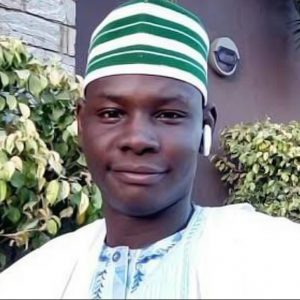
Blasphemy laws

Blasphemy laws; what are they? And why they must go.

What are blasphemy laws?

Blasphemy laws criminalize speech that is critical of religion or religious figures, or speech that a court finds to be offensive to religious believers.

Some blasphemy laws also criminalize intentional damage to property, such as places of worship, sacred sites or items that are revered by religious people. Blasphemy laws of this type are pointless, since all countries have criminal damage laws that can be used in such cases.

At the Foundation for Relious Freedom we are concerned about blasphemy laws that curtail freedom of expression.

Why do we have blasphemy laws?

Two reasons are usually given to justify blasphemy laws:

    1. They avoid hurting the feelings of religious people. This, it is argued, helps promote harmonious coexistence between different religious groups.
    2. They avoid inflaming the passions of religious believers which could spill over into civil disturbances and violence. In this way they help to keep the peace.

Many people suspect there is a third, unspoken reason for blasphemy laws which is to prevent criticism of a dominant religion that could result in believers drifting away from the faith. In this way, religious leaders and their political allies collaborate to defend the status quo. In effect, this is an attempt by authorities to force their beliefs onto the people which would be a gross violation of freedom of religion.

Are the reasons for blasphemy laws valid?

There is no reason religious feelings should be exclusively protected. It would be absurd, for example, to prohibit criticism of political beliefs. Indeed, only the worst police states would make laws to that effect.

We commonly see people holding very divergent political opinions and living together harmoniously in the same neighborhood—we even see it within families. It would be wrong to prohibit speech that might hurt political feelings and it is wrong to single out religion for such protection. Indeed, being able to discuss the differences between us is an indicator of a healthy society. Open disagreement can help us all to learn.

Using blasphemy laws to prevent civil disturbances and violence is unfair and wrong-headed. Violence and civil disturbance are crimes. In effect, blasphemy laws take away everyone’s right to freedom of expression so that some people will not be tempted to commit crimes.

This is like making it a crime for anyone to buy a new car because that will tempt some people to steal it! It is unquestionably perverse.

Blasphemy laws around the world

It is worth noting that only 69 countries have blasphemy laws which leaves some 126 countries managing perfectly well without them. Furthermore, of those countries with blasphemy laws, many no longer use them—they have become obsolescent.

Most countries with blasphemy laws have had them for a very long time. They are archaic laws that are slowly being repealed. For example, in the last decade or so, Greece, Ireland, UK, Malta, Iceland, Denmark, France, New Zealand, and Canada have repealed their old blasphemy laws.

The penalties for blasphemy range from a modest fine to execution. Freedom of expression is a fundamental human right according to the Universal Declaration of Human Rights, yet in 13 countries you can be put to death for doing something that is a fundamental human right in other countries. All the countries with harsh prison sentences, or in which blasphemy is a capital offense, are majority Muslim countries.

In Nigeria, 12 states have adopted a Shariah-based penal code in which blasphemy is an offence that may carry a death penalty.

So, what’s wrong with blasphemy laws?

As we have discussed, blasphemy laws are perverse and unnecessary. And they do not keep the peace. On the contrary, it is only in countries with blasphemy laws that people take offence and march through the streets to protest rumours of blasphemy. It is only in these countries that we see civil disturbances and violence resulting from allegations of blasphemy. The truth is, blasphemy laws, far from preventing civil unrest, actually promote it.

The way to reduce violence and civil disorder is to promote tolerance but blasphemy laws do the opposite. They send a strong message that the state will not tolerate criticism of religion and harsh penalties indicate that blasphemy is a terrible crime. Blasphemy laws promote intolerance. It is only in countries with harsh penalties for blasphemy that we see mobs killing people in the streets following allegations of blasphemy.

Blasphemy laws take away one of our most important rights—the right to express your opinion and they do that for no good reason. Blasphemy laws are demonstrably unnecessary.

It is not easy to define what speech is blasphemous and what is acceptable. Where is the dividing line between expressing your own personal religious view and offending someone else’s? This allows a person to be accused of blasphemy when they intended no affront, but were merely expressing a personal opinion. It is a crime that you may not know you have committed.

Finally, in blasphemy cases there is often no physical evidence. It is one person’s recollection of what said against another person’s recollection. This allows people to be accused of blasphemy for malicious reasons or through simple misunderstanding of what was intended. A misunderstanding that could change, or end, your life.

FRF’s view

At FRF we oppose all blasphemy laws and call for their repeal everywhere.

We support freedom of religion which means people should be free to practice a religion or to have no religion, to speak openly about their religious beliefs, and to change their religious beliefs. Religion is a matter for the individual, it is not for the state to mandate what beliefs a person may or may not have.

We campaign against blasphemy laws and, wherever possible, we will seek to defend people who have been accused of blasphemy.

Mubarak Bala: Direct appeal to President Buhari

At the end of April 2021, we reported that Mubarak Bala had been detained in Kano, Nigeria for a full year without being charged and without being brought to court. For most of that time, he was denied access to his lawyers.

His lawyers filed a Fundamental Rights Enforcement petition on May 8, 2020 and a court ordered Mubarak’s release on December 21, 2020. Kano State did not comply with the Court Order.

Getting up-to-date

On January 28, 2021, Mubarak’s lawyers filed a second Fundamental Rights Enforcement petition. According to the law, such an application must be treated as an emergency but, following delays and prevarication, this case has still not been heard in court, 243 days later. Mubarak has now been held for 517 days without a court appearance.

It has also emerged that Mubarak has an ongoing medical condition that requires regular medication. Despite requests, he has been denied access to a doctor and denied medication. His condition has worsened in recent months and he has been feeling very unwell.

Our next move

Whilst Mubarak’s legal team battle to have his fundamental rights case heard, FRF decided to launch a campaign to put pressure on President  Buhari directly. After all, this case is a clear and egregious breach of human rights that is occurring on his watch. And the case is playing out on the international stage and bringing Nigeria into disrepute.

We drafted an open letter to Buhari and today we placed a full-page ad in the Punch newspaper to give the letter a wide distribution. The open letter was sent to the President, to Senators, and to leading news outlets.

The letter listed the failures of Kano State to respect Mubarak’s constitutionally guaranteed rights and asked Buhari to intervene:

    1. To instruct the Federal Attorney-General to deal with the case as an emergency it is.
    2. To transfer Mubarak to a correctional facility in Abuja where he can be close to his wife, child, and lawyers and to ensure his lawyers have adequate access to him.
    3. To ensure Mubarak gets access to a doctor and to the medication he needs.

Now the President cannot deny knowledge of Kano State’s mistreatment of Mubarak Bala. A copy of the advertisement is attached.

If you can help with Mubarak’s case, please get in touch: contacts@frf-nigeria.org.

Open letter to President Buhari

Mubarak Bala illegally imprisoned

Background

Mubarak Bala, President of the Humanist Association of Nigeria, was arrested in Kaduna, Nigeria on Tuesday, April 28, 2020. He was held overnight and taken to Kano State the following day. At the time of writing, he is still incarcerated and he has not appeared in front of a court. Today, Mubarak has been illegally detained for one year.

The Nigerian Constitution is clear, a detained person must be charged and brought before a court within 7 days. Mubarak has not been charged and he has not been brought before a court.

Mubarak’s lawyers have been denied access to him, contrary to the requirements of the Constitution. In July 2020, a court ordered Kano authorities to grant his lawyers access. The Court Order was disregarded. It was not until November, seven months after his arrest, that his lawyers were able to speak to him and confirm he was still alive.

Kano authorities denied Mubarak a list of fundamental rights guaranteed by the Constitution, so his lawyers went to court to restore his rights. The petition was filed on May 8, 2020. According to the law, such a case must be treated as an emergency and must be heard within seven days. To its shame, the Nigerian court system in collaboration with Kano State lawyers repeatedly delayed the hearing for 164 days. The case was heard on October 19, 2020. The decision, delivered on December 21, 2020, was that Mubarak must be released immediately and paid compensation for the infringement of his fundamental rights.

Mubarak was not released.

Why was Mubarak arrested?

A complaint against Mubarak was raised on Monday, April 27 by S. S. Umar & Co, a law firm from Kano. It alleged Bala’s Facebook posts were “provocative and annoying to the Muslims”. The complaint, sent to the Kano Commission of Police, highlights a post made on April 25, which rendered in English, reads,

“There is no difference between the prophet TB Joshua of Lagos and Prophet Mohammad of Saudi Arabia, our own from Nigeria is even better in that he was not a terrorist.”

The complaint says Mubarak’s remarks “will definitely incite Muslims and provoke them to take the law into their own hands, which may ultimately result into public disturbance and breach of the peace.”

As the complainants admit, the Constitution of the Federal Republic of Nigeria guarantees citizens the right to freedom of expression. But their concern was not to protect Mubarak’s guaranteed constitutional rights, it was to deny him those rights in order to defend those Muslims who might create public disturbances and breaches of the peace which are ILLEGAL actions. In other words, they sought to defend potential criminals by denying a law-abiding citizen his guaranteed rights!

FRF support

For the avoidance of doubt, FRF does not represent Mubarak. He has his own legal team. Whilst we keep in touch with his lawyers, they pursue their own legal processes entirely independently. Our role has been to publicise the case and support Mubarak’s wife.

We have been working with Nigerian civil society groups, making contact with governments and human rights organisations such as Amnesty International, The United Nations, the European Office of the High Commissioner for Human Rights, USCIRF, the Nigerian Human Rights Commission, and others.

Our officers have written letters and articles, and attended meetings to publicise this case.

Members of our team speak with Mubarak’s wife several times each week to help her cope with the situation she finds herself in. Her son was six weeks old when his father was arrested and this has been an extremely difficult time for her.

In early August 2020, when we did not know if Mubarak was alive or dead, we drafted a letter on her behalf demanding proof of life. This was sent to international media and to President Buhari, the Nigerian Senate President and the Speaker of the House of Representatives. We also sent the letter to every Senator.

Our work continues. If you can help with Mubarak’s case, please get in touch: contacts@frf-nigeria.org.

Umar Farouk Starts New Life

Umar Farouk Safe at Last

As previously reported, on January 25, our lawyers collected Umar Farouk from a courtroom in Kano after a judge set aside his blasphemy conviction. With Kano’s history of mob violence, it was essential to keep him safe for the first few days and then to find long-term accommodation for him in a safe location. Immediately after his release we engaged United Nations help to transfer Umar to Abuja where the UN provided temporary accommodation.

The only family members who stood by Umar during his incarceration and trial were his sister and her husband. With enormous generosity, they agreed to relocate with Umar so he will not be completely isolated.

Umar waiting to board a plane to safety

On February 3, Umar was taken to the Registry of Births & Deaths to obtain a copy of his birth certificate—a vital document for his new life. Later that day he boarded an Ibom Air flight to make a new life in Nigeria. This was the first flight Umar has ever taken and, as he settled in his seat, he must have felt safe for the first time in almost a year.

In more good news, the Director of the Auschwitz Memorial, who read about Umar’s ordeal online, sent a message to our lawyers expressing elation that Umar is free and pledged to raise funds to pay for his education.

As I write this, Umar is sleeping safely in a new abode kindly provided through UNICEF, the Nigerian Human Rights Commission, and a partner agency. We are deeply indebted to these agencies, to our lawyers who put themselves at risk by traveling to Kano on multiple occasions, to the Director of the Auschwitz Memorial, and above all, to Umar’s sister who gave up so much to stand by her younger brother. She and her family will join Umar in a few day’s time.

Umar Farouk Released

Umar Farouk is Free!

Today, prison guards escorted Umar Farouk to a Kano court where he was handed over to our lawyers. Sixteen-year-old Umar had been found guilty of blasphemy in a Kano magistrates court on August 10 and was sentenced to 10 years imprisonment with menial labor. 

Our lawyers successfully appealed the sentence. It is a joy to see this young boy free at last. I would like to thank our legal team for their tireless work on behalf of Umar and Yahaya Shariff-Aminu—we appealed his death sentence too but the court remitted him back to the Shariah court for a re-trial.

We also thank the United Nations team who kindly attended today to help with transport and temporary accommodation. And we are grateful to the Kano Court and prison service for the judgment and for their cooperation to make the handover safe and straightforward.

However, Kano continues to hold Yahaya Sharif-Aminu on blasphemy charges. Our legal team filed a Notice of Appeal today regarding Yahaya. We will argue he cannot be tried twice for the same offence and that on quashing his conviction, he should have been discharged and acquitted. We will also argue that blasphemy laws within the Kano Shariah Penal Code are incompatible with the Federal Constitution, which protects the fundamental freedoms of religion, thought, and expression.

Yahaya and Umar II

The court decides

Our lawyers were in court yesterday to hear the Appeal Court’s decision in the cases of Yahaya Shariff-Aminu and Umar Farouk. These two young men, 22 and 15 years old respectively, were accused of blasphemy and, in the same closed Kano courtroom on the same day in August last year, both were found guilty by Justice Khadi Aliyu Muhammad Kani. 

Neither was represented by legal counsel, and no evidence was produced in either case. The court relied upon admissions of guilt extracted by police through interrogations that were not video recorded.

The judge ordered that Yahaya be hanged from the neck until dead and Umar be imprisoned for 10 years with menial labour. The convicts were granted 30 days to appeal (rather than the normal 90 days) and were held incommunicado with no access to lawyers.

Our lawyers appealed both convictions on November 26, 2020. See details here

Umar’s Decision

Yesterday, the court was so crowded with people wanting to witness events that an extra gallery had to be cleared to make room. People took their seats and the decision in Umar’s case was announced first. Chief Judge Justice N. S. Umar and Justice Nasiru Saminu’s decision was that Umar had been convicted in error and the conviction is to be set aside and the court acquitted Umar and ordered that he must be released.

Yahaya’s Decision

Yahaya Sharif-Aminu in prison

The findings in Yahaya’s case were identical and his conviction was quashed. But instead of declaring him discharged and acquitted, the judges remitted him back to the Shariah court for a retrial. We wonder why such different outcomes for two cases in which the facts were essentially the same?

We must speculate, but Yahaya’s case had received huge media coverage whilst Umar’s case had not. Furthermore, Yahaya’s case had incited mobs in the streets of Kano and his father’s house was destroyed by fire. As expected, the packed courtroom was emotionally charged with frequent shouts of “Allahu Akabar” coming from the crowd. It would have taken a brave judge to set Yahaya free against that backdrop. Justices Umar and Saminu were not brave. They opted to let another court decide Yahaya’s fate.

Next Steps

Now the case is over, we have to get Umar released from prison. This involves obtaining a signed warrant from the court and presenting it at the prison. Our lawyers were hoping to do that today but the official signatory was not available so we will try again on Monday. We should all remember, Kano State has the option to appeal yesterday’s decision if they are minded to keep this child in prison. If they do, we will appeal to a higher court.

We also have to decide what to do about Yahaya’s case. If we return to the Shariah court as ordered by the Appeal Court, the argument will revolve around due process and the Appeal court has already found that wanting. Furthermore, the Shariah court is not competent to consider other motions, especially our contention that the Penal Shariah code is incompatible with the provisions of the Federal Constitution of Nigeria. If we can get a court to rule in favor of that argument, the foundations upon which blasphemy laws in Nigeria rest will be swept away and we would be free to challenge blasphemy laws in every state of the Federation.

We Will Appeal Again

So, following a case conference today, our lawyers decided to file an appeal at the Federal Court of Appeal to have yesterday’s decision set aside. This should enable Yahaya to be set free and to have the constitutionality of blasphemy laws in Kano put under the microscope. 

Whatever happens, we will work to have Umar released from prison and transferred to a safe location and to have Yahaya set free.

Yahaya and Umar I

Two blasphemy cases appealed

Today, our legal team appeared in the Kano High Court, arguing appeals for Yahaya Sharif-Aminu and Umar Farouk. On August 10, 22-year-old Yahaya was sentenced to death and 15-year-old Umar was sentenced to 10 years in jail with menial labor, both on charges of blasphemy. 

The appeals were heard by the Chief Justice of Kano, N.S. Umar and Justice Nasiru Saminu.

Our legal team arrived at court early and passed through a crowd of people who had come to see these cases but were unable to get into the already-packed court. Outside a substantial contingent of police officers were on hand to keep the peace but the crowd remained calm throughout.

Our legal team comprised (from left to right in the picture) Ebuka Ikeorah, Rouf Gazali, AA Muhammad, Murtala A. Alimi, and Kola Alapinni (lead counsel). We are grateful to these men for taking on this controversial case, especially since the Muslim Lawyers Association of Nigeria declared on August 15 that the death sentence on Yahaya was correct and urged the Government in Kano State to carry out the execution. Such a statement from a body that should remain strictly neutral would undoubtedly serve to intimidate lawyers who might otherwise have acted for Yahaya.

Neither appellant was in court today and our lawyers have been officially denied access to them since their trial in August.

Umar Farouk’s appeal was first up. Our lawyers argued that Umar was not legally represented at his trial, that he would not have pleaded guilty if he had been legally represented, and that he was below the age of criminal responsibility at the time of the alleged offense. Interestingly, prior to the court hearing, Kano state lawyers stood by the Shariah definition of “full age”. By this definition, a boy who has underarm hair and is able to produce semen may be prosecuted. However, they did not argue this point in court. In fact, they did not respond to any of the grounds of appeal proposed by our lawyers.

Yahaya Sharif-Aminu

Yahaya Sharif-Aminu

Yahaya Sharif-Aminu’s case was next up. Yahaya was of full age when the alleged offense took place but no evidence was produced at his trial and he suffered the exact same denial of rights and unfair trial process as Umar.

Kano State argued that Yahaya admitted his guilt and admission is “better than evidence”. But, of course, if he had been legally represented he would not have admitted guilt.

Our lawyers made the point that the right to life is a person’s most fundamental human right and this right cannot be denied except after the most diligent and fastidious investigation and trial, which did not happen in this case.

In both cases, our lawyers argued that the Federal Constitution of Nigeria protects the right to freedom of expression and that any law that seeks to deny that right must be void. In other words, the blasphemy laws in the Kano Shariah Penal code are unconstitutional and should be struck down.

The Judges retired to make their judgment. The date on which this will be announced will be advised in due course.

If the Judges should quash these sentences, Kano State Governor, Abdullahi Umar Ganduje, has promised to appeal against the decision. If the sentences are not overturned, we will appeal again. So, we expect these cases to continue, most likely to the Supreme Court of Nigeria.

Freedom of expression

Why FRF supports freedom of expression

Salman Rushdie

If you are in your forties or older, you will remember the publication of Salman Rushdie’s book The Satanic Verses in September 1988. When publisher Viking Penguin, took on this novel they could never have imagined the dire consequences that decision would bring.

Some Muslims in the UK considered the book blasphemous and the publisher received tens of thousands of letters demanding that the book should be withdrawn from sale. Then there were demonstrations and bookshops were picketed, then bookshops were bombed. Some countries banned the sale of the book.

With the publication of the book in the US in February 1989, the turmoil stepped up a gear. Demonstrations grew in number and violence and spread to many parts of the world. On Valentine’s Day 1989, the Supreme Leader of Iran, Ayatollah Khomeini, threw petrol on the flames by issuing a Fatwa declaring the book blasphemous and ordering Muslims to kill Rushdie wherever in the world they find him.

No one knows how many people lost their lives to violence throughout the Rushdie affair but it is almost certain to be counted in dozens.

Recent cases

For many in the West, this was their introduction to the tension between the cardinal Western value of freedom of expression and the Islamic value of intolerance toward criticism of the religion or its Prophet. But we have lived to see dozens more cases from the 2015 Charlie Hebdo massacre in response to the magazine publishing cartoons of Muhammad, to the recent death sentence by hanging imposed on Yahaya Sharif-Aminu in a Northern Nigerian court for “insulting the Prophet”. We have seen judicial killings, isolated attacks and we have seen mob violence.

Echoes of Charlie Hebdo can be heard today as those accused of collaborating with the 2015 attackers are brought to trial in France. On October 16, French teacher Samuel Paty, was decapitated near his school after showing his students images of several Charlie Hebdo front covers in a discussion on free speech. Thirteen days later, three people were killed by an Islamic attacker in the Notre Dame Basilica in Nice. One victim, a 60-year-old woman, was decapitated. In a third incident two days later, a Greek Orthodox priest was shot twice in the stomach by a man carrying a sawed-off shotgun. The assailant is being hunted by police who are investigating a possible religious motive for the attack.

President Macron

France’s President Emmanuel Macron’s condemnation of these attacks and vigorous defense of free speech, including the freedom to depict Muhammad in cartoons, led to protests around the Muslim world with calls to ban French goods and the burning of Macron effigies.

The Muslim response

Many Muslims in France and beyond have condemned the killings in France or, at least, claimed that the killers were not “real” Muslims. For example, Sheikh Ahmed al-Tayeb of the leading Sunni Islamic institution in Egypt said, “As a Muslim and the Sheikh of Al-Azhar, I declare that Islam, its teachings and its Prophet are innocent of this wicked terrorist crime. At the same time, I emphasize that insulting religions and attacking their sacred symbols under the banner of freedom of expression is an intellectual double standard and an open invitation to hatred.”

What we say

We applaud Muslims who speak up and condemn acts of terrorism. But Muslims need to go further than Al-Tayeb. It is not enough to condemn violence without condemning the values that underpin it. Here Al-Tayeb grants that Muslims have valid grounds for hatred. They do not. Fundamentally, hatred is the problem. Hatred must be attacked as much as the violence it spawns. As long as we have hatred, we will have people who will be provoked into violence.

In our world more than 80% of the population is religious and there are dozens of religions and tens of thousands of religious denominations. That makes disagreement over religion inevitable. We can either make our world a tinder-dry forest waiting to be set ablaze by any careless remark or we can act to make it fireproof.

We can make it fireproof by emphasizing tolerance over hatred. Let’s teach our children that tolerance is noble and hatred is wicked. Let’s teach them to talk calmly with people they disagree with, or just to walk away if they hear things that are too uncomfortable to tolerate. In such a world, there would be no judicial killing, no isolated attacks, and no mob violence will befall those who utter unpopular opinions. The world would be a safer place and we may all learn something when ideas can flow freely.

This is why those who wrote the Universal Declaration of Human Rights in 1948 included Article 19, the fundamental human right to freedom of opinion and expression.

Blasphemy laws outlaw speech that religious people find offensive. Such laws are usually justified on the grounds that they prevent speech that might cause a breach of the peace. But that logic is utterly perverse. It takes away one person’s fundamental rights in the hope that it will stop another person from engaging in criminal behavior. That is exactly like a law that prohibits me from buying a beautiful car because that will stop potential criminals from stealing it!

At FRF, we strongly support freedom of expression and oppose blasphemy laws that curtail freedom of expression and are themselves a cause of injustice, violence and hatred. For the avoidance of doubt, this does not mean we encourage people to insult or mock religions—we don’t, but we do defend everyone’s right to speak freely, even when some people may feel insulted as a consequence.

Blasphemy laws must go.

_______
Photo credit: Creative Commons

Umar Farouk’s sentance appealed

A Shari’a court in the Hausawa Filin Hockey area of Kano City in Kano state, northern Nigeria, has sentenced a minor to 10 years in prison with menial labour for blasphemy.

Umar Farouk, 15, was found guilty on 10 August of using foul language against God during an argument with a friend.  He has been given a month in which to appeal the verdict.

Umar was convicted on the same day, in the same court and by the same judge who handed down a death sentence on Yahaya Sharif-Aminu, also for blasphemy. See that story here

Like Yahaya, Umar was tried and sentenced without legal representation. He was given leave to appeal but, without, legal help, he had no chance.

This is why we took up his case. Although we were not allowed to meet with Umar or to see a transcript of the court case, we prepared an appeal and filed it at the Kano High Court on September 7, two days before his appeal deadline expired.

Now, we will apply to meet with Umar and will file an application for bail. We have met with some of his relatives and have secured proxy consent to represent him for his appeal.

FRF will not charge fees for this work. We will do this as a charitable service because Umar’s constitutional rights were denied him throughout his detention and trial and because blasphemy is only a religious crime and it is in direct conflict with Nigeria’s secular constitution. 

Yahaya Sharif-Aminu

FRF appeals death sentence

On August 10, Judge Khadi Aliyu Muhammad Kani at the Upper Shariah Court in the Hausawa Filin Hockey area of Kano State, Nigeria, sentenced 22, year-old Yahaya Sharif-Aminu, to death by hanging. He was given 30 days to appeal.

Yahaya was accused of making comments on WhatsApp that elevated Imam Ibrahim Inyass above Muhammad. Shortly afterward a mob gathered around his family home and caused enough damage to render it uninhabitable. The mob then moved to the headquarters of the Islamic police and demanded action against the singer.

Mr. Sharif-Aminu was tried and sentenced without legal counsel. He is was held incommunicado making it impossible for him to seek legal advice to lodge an appeal.

In any case, the intimidation prevalent in the Northern State makes it next to impossible to find a lawyer who is prepared to act for a blasphemer. Most lawyers feel the punishment is justified and wish to see events take their course. Others, accept that everyone has a right to legal advice and due process but are cowed by the extreme anger that surrounds blasphemy cases—no lawyer’s safety can be guaranteed in this state. Even lawyers who are prepared to stand up for justice, know they they face a future of rejection by their legal colleagues and a probable end to their career.

This comes as Mubarak Bala has been held incommunicado in the same Nigerian state for 16 weeks for allegedly insulting the Islamic prophet. Both Sharif-Aminu’s case and Bala’s case have been characterized by a disregard for due process and violation of their human rights.

A chorus of condemnation has rained down on Kano State from Amnesty International, The U.S. Commission on International Religious Freedom (USCIRF) and many others. Two petitions have been started at Change.org, including one addressed to Nigerian President Muhammadu Buhari that had 85,000 signatures at the time of writing this. Please sign it here.

FRF decided to take action on behalf of Sharif-Aminu and filed an appeal on his behalf. On Thursday, September 3, lawyer Kola Alapinni, an FRF Trustee, filed an appeal against the death sentence. This removes the immediate danger to Sharif-Aminu’s life. Now we will seek access to him in order to prepare his defence.